Merixa Pest Treatment logoMerixa Pest Treatment
Fast, upfront pest control sevice in Boston, MA, free quote in minutes

PEST CONTROL SERVICE Boston

Securing an authoritative PEST CONTROL SERVICE in Boston stops structural deterioration and prevents contamination in dense urban environments. Historic brownstones and multi-family dwellings require precise mechanical exclusion, species-specific chemical controls, and targeted micro-treatments rather than diffuse perimeter sprays.
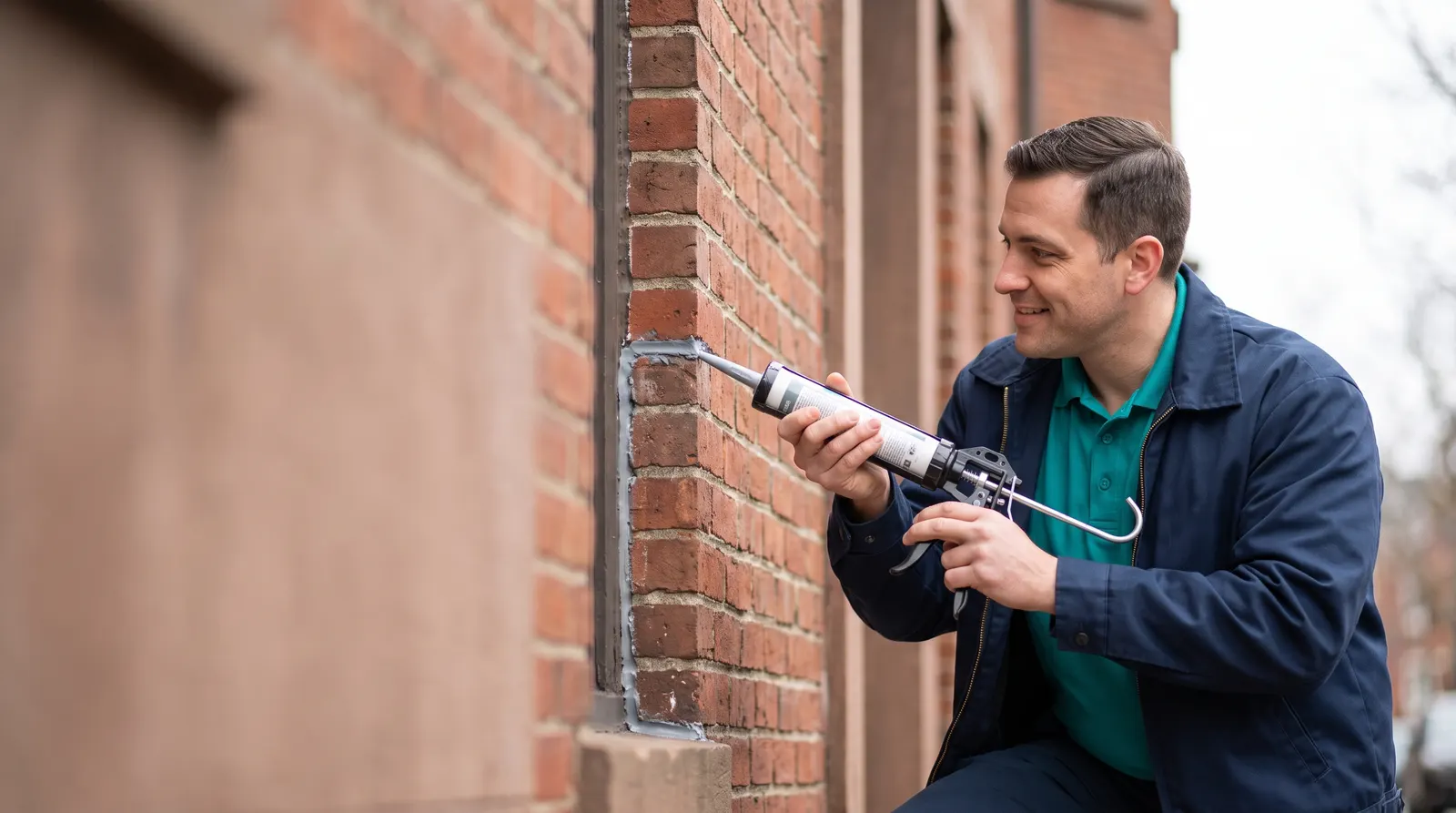
Get your free pest control sevice quote, Boston

We only use your ZIP to check availability, no spam.

Historic Brownstone Rodent ExclusionSubterranean Termite Perimeter DefenseThermal Bed Bug Eradication
Pest Control Sevice in Boston, MA
Pest Control Sevicein Boston, MA

What is Pest Control Sevice in Boston, MA?

A pest control service in Boston is a specialized structural intervention that identifies, eradicates, and physically excludes biological pests from residential structures across Suffolk County.

Why Boston homeowners choose Merixa Pest Treatment

  • Baseline diagnostic on-site evaluations for Boston residential properties start at a minimum charge of $150.
  • Physical exclusion using 16-gauge stainless steel mesh and non-shrink hydraulic cement stops rodent transit through shared party walls.
  • Spring emergence from April through June initiates Eastern subterranean termite swarms, requiring localized non-repellent liquid barriers.
  • Dense multi-family housing near September 1st lease turnovers demands single-session thermal remediation exceeding 122°F for bed bugs.
Historic Brownstone Rodent Exclusion
Subterranean Termite Perimeter Defense
Thermal Bed Bug Eradication
Our Expertise

Pest Control Sevice services in Boston

Every service reflects the same meticulous attention to detail, whether it's a single job or a larger pest control sevice project across Boston.
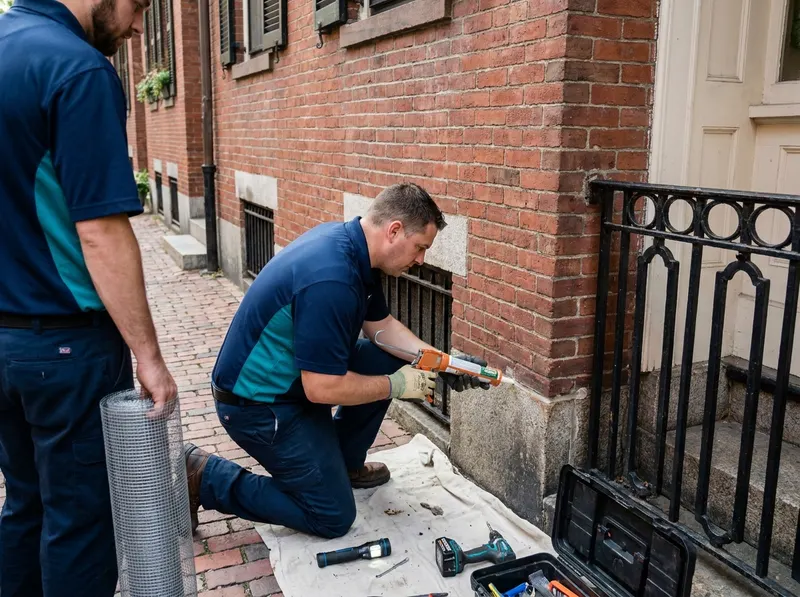
Historic Brownstone Rodent Exclusion in Boston, MA

Historic Brownstone Rodent Exclusion

Historic brownstone rodent exclusion addresses Norway rats (Rattus norvegicus) and house mice (Mus musculus) navigating multi-wythe brick walls, unexcavated crawlspaces, and vertical utility pipe chases. The technical service involves a complete structural audit from basement floor plates to roof cornices, sealing foundation penetrations with 16-gauge stainless steel wire cloth, pure copper mesh, and elastomeric or non-shrink hydraulic cement. Technicians focus on deteriorated lime mortar joints along party walls, sub-sidewalk coal vaults, and plumbing penetrations where structural masonry meets wooden floor joists. Halting interior migration between connected row houses permanently stops rodent colonization without introducing hazardous chemical baits into living envelopes, preserving indoor air quality and structural integrity across historic urban footprints.

Get a quote →
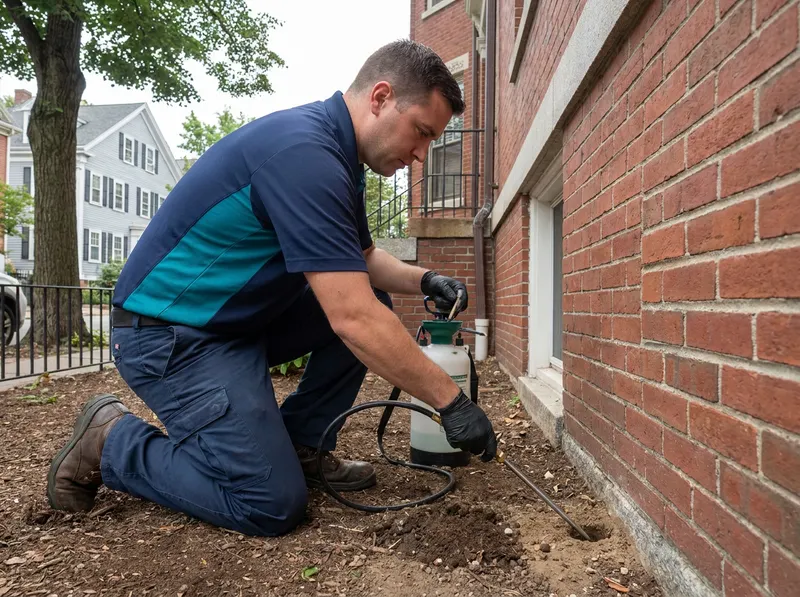
Subterranean Termite Perimeter Defense in Boston, MA

Subterranean Termite Perimeter Defense

Subterranean termite perimeter defense halts Reticulitermes flavipes before structural framing suffers irreversible cellulose mass depletion. The procedure combines trenching perimeter soil four to six inches deep along stone foundations, micro-injecting non-repellent fipronil termiticides at a standard concentration of 0.06 percent, and installing sub-surface monitoring stations spaced every 10 to 15 linear feet around the property footprint. Where attached concrete steps, patios, or brick walkways abut the sill plate, technicians drill half-inch holes spaced twelve inches apart through the slab to establish an unbroken chemical barrier down to the foundation footing. The non-repellent chemistry allows foraging worker termites to transfer active toxicant molecules back to the subterranean nursery gallery, achieving full colony collapse within sixty to ninety days.

Get a quote →
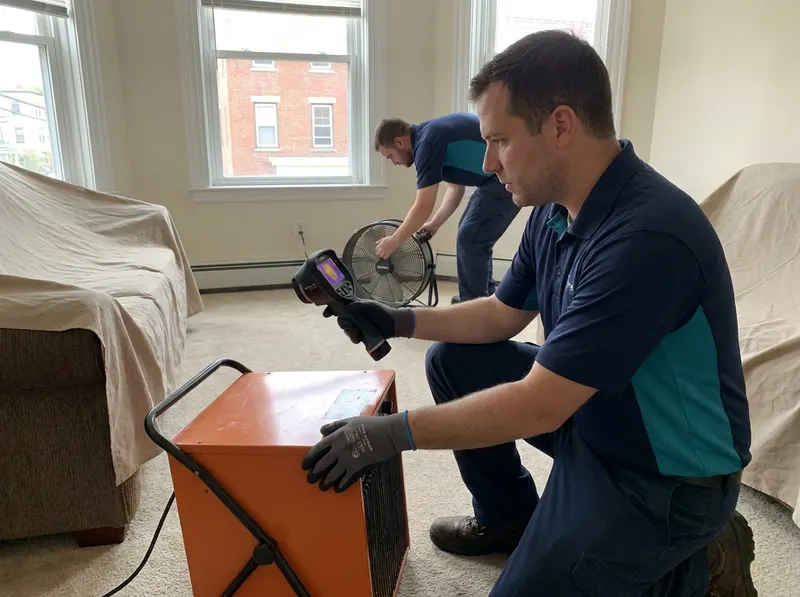
Thermal Bed Bug Eradication in Boston, MA

Thermal Bed Bug Eradication

Thermal bed bug eradication eliminates Cimex lectularius eggs, nymphs, and adults across multi-family residential properties in a single operational day. High-output electric heaters and industrial axial air movers raise and sustain ambient interior temperatures between 122°F and 135°F for a continuous exposure window of four hours. High-temperature thermal energy penetrates deep mattress cores, upholstered furniture frames, hardwood subflooring, baseboard chases, and interior wall voids without leaving persistent chemical residues. Remote wireless thermal sensors placed in low-temperature cold spots monitor thermodynamic saturation in real time, ensuring all pest life stages reach their thermal death point without damaging sensitive electronics, plaster walls, or architectural trim.

Get a quote →
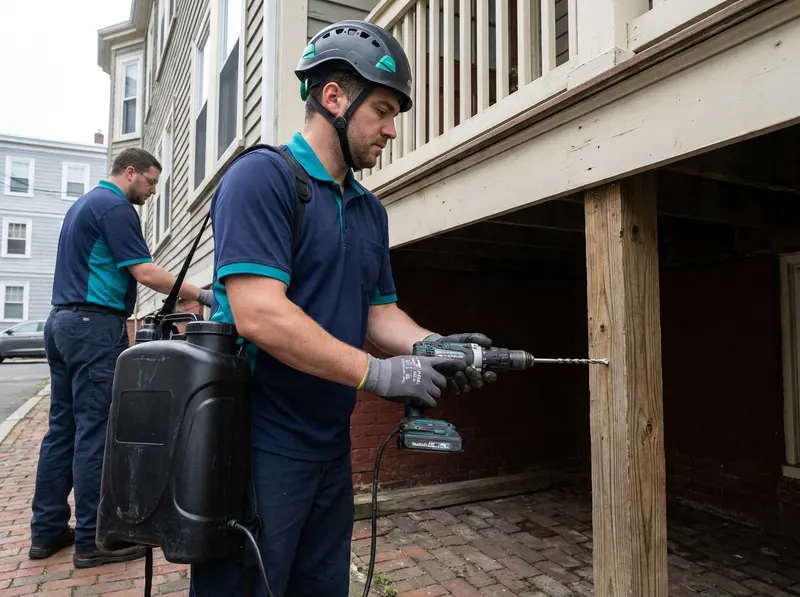
Carpenter Ant Structural Remediation in Boston, MA

Carpenter Ant Structural Remediation

Carpenter ant structural remediation identifies and eradicates Camponotus pennsylvanicus parent and satellite colonies nesting inside moisture-damaged structural timbers. Technicians deploy concentrated non-repellent micro-encapsulated formulations directly into localized wall voids, window headers, and roof valleys using low-pressure injection tips. Moisture meters track damp zones where roof leaks, deteriorated gutter flashing, or wet basement sills provide the soft wood fibers required for colony gallery excavation. The non-repellent active ingredient clings to the cuticular hairs of foraging workers, which unknowingly transport the lethal dose back into the core nest where the reproductive queen resides, neutralizing the entire structural infestation within two to three weeks.

Get a quote →
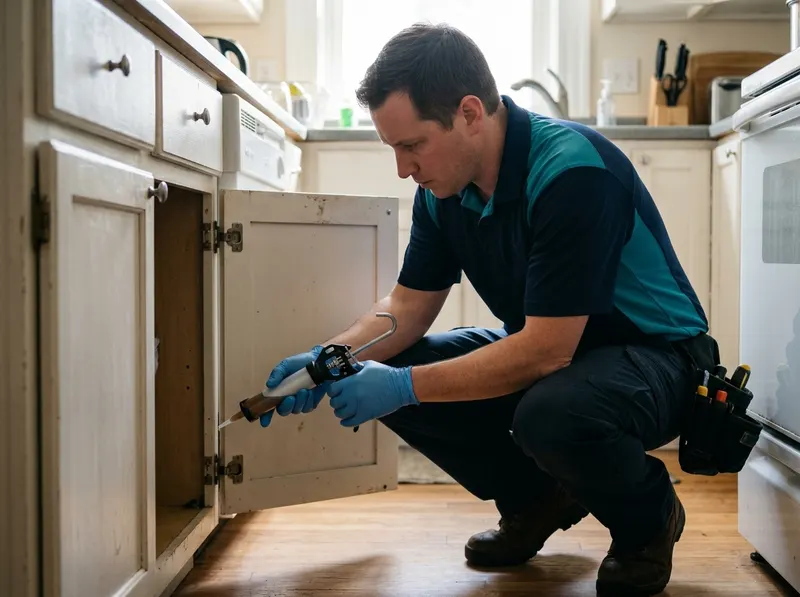
Cockroach Gel-Bait Micro-Treatments in Boston, MA

Cockroach Gel-Bait Micro-Treatments

Cockroach gel-bait micro-treatments eradicate severe Blattella germanica infestations inside high-density multi-unit residential kitchens, bathroom plumbing walls, and central utility shafts. Technicians apply targeted micro-droplets of fipronil or indoxacarb gel bait measuring approximately 0.05 grams directly into hidden harborages, including cabinet hinge mortises, drawer slides, undersides of sink basins, and appliance motor housings. This targeted placement is paired with micro-sprayed insect growth regulators (IGRs) like hydroprene, which prevents juvenile nymphs from maturing into fertile adults and disrupts the reproductive cycle. This methodology circumvents the need for airborne aerosol misting, ensuring zero contamination of food preparation surfaces while neutralizing bait-resistant populations through horizontal secondary transfer.

Get a quote →
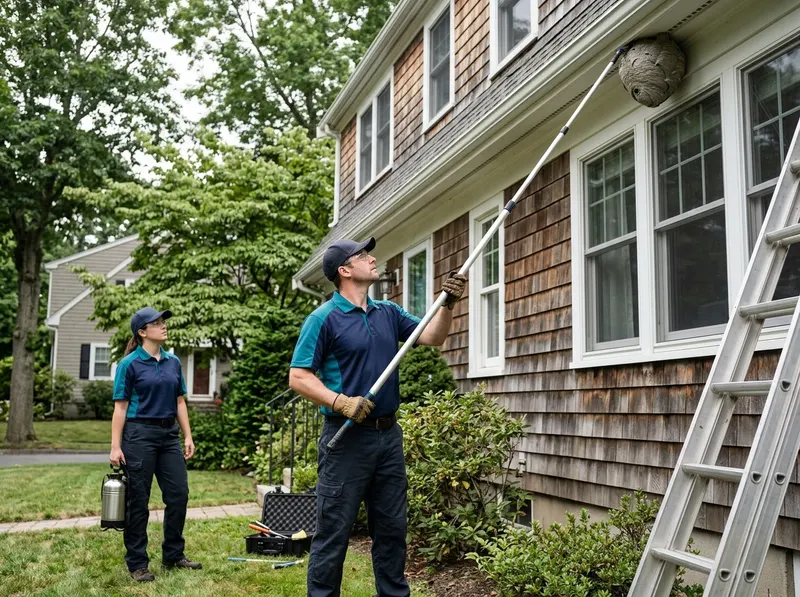
Exterior Stinging Insect Nest Removal in Boston, MA

Exterior Stinging Insect Nest Removal

Exterior stinging insect nest removal eliminates aerial yellow jackets, baldfaced hornets (Dolichovespula maculata), and European paper wasps from residential soffits, masonry recesses, dormers, and chimney flashings. Technicians utilize specialized high-reach extension poles and pressurized micro-particle dusters to deliver pyrethroid formulations directly into the entrance aperture of the nesting envelope. Once worker and queen activity completely ceases, the physical paper carton or subterranean comb structure is mechanically excised and bagged for off-site disposal to prevent dermestid beetle scavenging or secondary nest reoccupation. All entry voids in the architectural trim are sealed using expanding closed-cell foam or stainless mesh to secure the building envelope.

Get a quote →
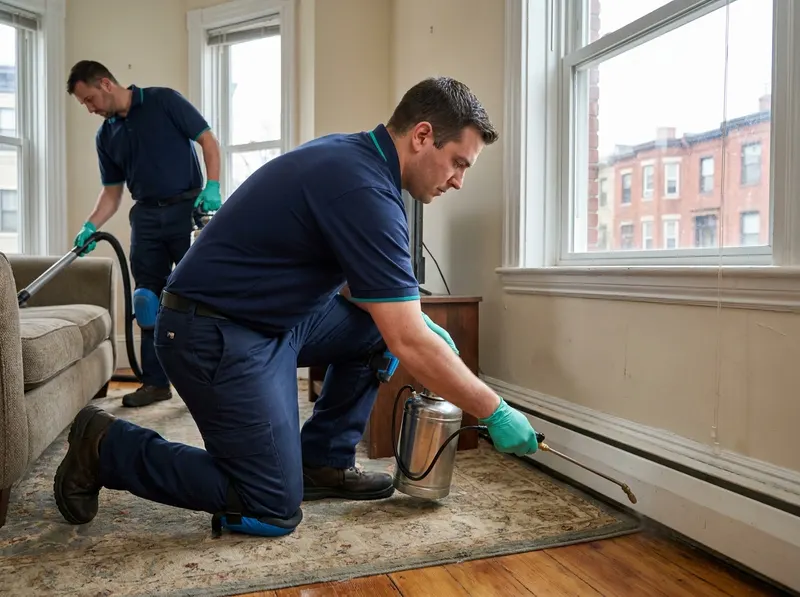
Interior Flea and Tick Eradication in Boston, MA

Interior Flea and Tick Eradication

Interior flea and tick eradication addresses active infestations of Ctenocephalides felis and Ixodes scapularis carried into living quarters by domestic animals or urban rodent vectors. The process involves a comprehensive surface application using an adulticide combined with an insect growth regulator (IGR) such as pyriproxyfen across carpet pile, upholstered furniture seams, hardwood expansion gaps, and baseboard junctions. The chemical mechanism paralyzes active adults while preventing dormant flea pupae and eggs from completing their lifecycle. A mandatory high-filtration mechanical vacuuming protocol immediately precedes the intervention to stimulate adult emergence from protective pupal cocoons, ensuring maximum chemical uptake and full eradication within fourteen days.

Get a quote →
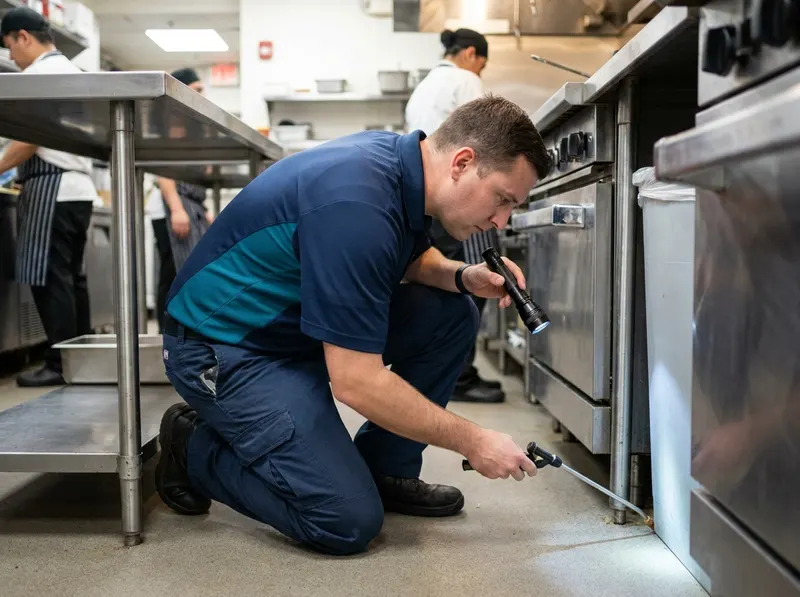
Commercial Restaurant Food Defense in Boston, MA

Commercial Restaurant Food Defense

Commercial restaurant food defense establishes pest-free operating perimeters for dining and food-handling facilities under Boston Inspectional Services Department mandates and Title 105 CMR 590.000 sanitary standards. Interventions integrate tamper-resistant interior rodent trapping stations, floor drain bio-enzyme foaming treatments to consume fruit fly breeding sludge, and scheduled mechanical exclusion along back-dock receiving bays and threshold weatherstripping. Technicians maintain strict digital service logs detailing bait consumption rates, trap counts, and environmental sanitation deficiencies to ensure regulatory compliance during municipal health inspections, eliminating rodent and insect vectors from dry storage zones and commercial cooking lines.

Get a quote →
The essentials

What Boston customers should know

  • Baseline diagnostic on-site evaluations for Boston residential properties start at a minimum charge of $150.
  • Physical exclusion using 16-gauge stainless steel mesh and non-shrink hydraulic cement stops rodent transit through shared party walls.
  • Spring emergence from April through June initiates Eastern subterranean termite swarms, requiring localized non-repellent liquid barriers.
  • Dense multi-family housing near September 1st lease turnovers demands single-session thermal remediation exceeding 122°F for bed bugs.
  • Massachusetts pesticide regulations mandate registered or commercial certification under 333 CMR for all structural chemical applications.
The Merixa Pest Treatment standard

Why Boston keeps calling us back

01

A clear, written price

You get a firm, itemized quote for your pest control sevice before any work begins, no surprises, no pressure.

02

Your property, protected

Careful prep, tidy work, and a full cleanup when we are done. We treat your home and belongings like our own.

03

One crew, start to finish

The same trusted, background-checked team from the first call to the final check.

Buyer's guide

Choosing the right pest control sevice pro in Boston

If active rodent movement occurs within historic masonry or double-wythe brick walls, select mechanical exclusion combined with interior snap-trap networks. If the issue involves dry food stores or pantry beetle activity, select localized inspection, sanitation, and targeted insect growth regulators. The trade-off centers on project scope: exclusion requires structural aperture sealing across shared party walls and foundation sills to prevent re-entry, whereas interior baiting or micro-injections address only currently active specimens inside the living envelope.

For subterranean termites, soil-applied non-repellent termiticides establish an exterior perimeter barrier around granite footings; this procedure provides five-year residual protection but requires trenching soil or drilling concrete slabs, unlike topical wood borate treatments that defend exposed framing in basements but leave subterranean colonies active. When dealing with bed bugs, whole-structure thermal remediation delivers a single-day 100 percent mortality rate across all life stages, including heat-resistant eggs, by maintaining ambient temperatures between 122°F and 135°F; the trade-off is higher upfront capital cost compared to multi-visit synthetic chemical treatments that require three to four separate applications spaced fourteen days apart. If carpenter ants have established satellite nests inside moisture-damaged wooden framing, localized void injection of non-repellent micro-encapsulated concentrates neutralizes the worker colony within seventy-two hours, while topical perimeter sprays create an exterior barrier that repels foraging ants without eradicating the parent queen nesting off-site in decaying root systems.

For multi-unit apartment complexes facing continuous German cockroach pressures, deploying precision indoxacarb gel micro-droplets directly inside cabinet hinge mortises and appliance motor housings avoids airborne aerosol exposure in living spaces, though it requires strict tenant compliance with structural sanitation and zero grease accumulation to ensure feeding uptake. Exterior yellow jacket or hornet infestations situated under high architectural dormers require direct pressurized pyrethrin aerosol injection followed by physical envelope scraping; this provides immediate mechanical clearance, whereas ground-level bait traps reduce local forager density over a period of two weeks without removing the primary nesting hive hanging from the soffit.

Investment

Pest Control Sevice cost in Boston

Every project gets a firm, written price after a free on-site visit. Ranges below for orientation.

Baseline Structural Assessment & Diagnostic Visit$150 to $275
Targeted Interior Micro-Treatment (Ants, Fleas, Roaches)$185 to $425
Mechanical Rodent Exclusion & Cleanout (Single-Family)$350 to $1,200
Historic Brownstone Multi-Unit Rodent Exclusion$750 to $3,200
Single-Room Bed Bug Targeted Chemical Protocol$350 to $650
Full-Structure Thermal Bed Bug Remediation$1,200 to $3,800
Subterranean Termite Perimeter Trenching & Injection$1,100 to $2,950
Exterior Stinging Insect Nest Removal$150 to $350
Sub-Slab Termite Concrete Core Drilling & Treatment$850 to $1,800
Crawlspace Vapor Barrier & Mechanical Sealing$1,400 to $4,500
Commercial Kitchen Drain Biotherapy & Maintenance$225 to $600
Seasonal Tick & Mosquito Yard Barrier Treatment$175 to $450
Free, no-pressure estimate

Get it done right

Tell us about your pest control sevice job and we'll send a clear, written quote, usually the same day. Or just call and talk to a real Boston pro.

(339) 463-5669

Get your free pest control sevice quote, Boston

We only use your ZIP to check availability, no spam.

Where we work

Areas we serve near Boston

Merixa Pest Treatment pest control sevice team in Boston, MA

Boston properties face distinct structural pest pressures due to high-density 19th-century brick row homes, rubble-stone foundations, and historic wooden balloon framing. In neighborhoods like Back Bay and Beacon Hill, shared party walls allow subterranean Norway rats to travel entire city blocks through compromised sewer laterals, sub-sidewalk coal vaults, and dry-laid stone masonry without ever surfacing outdoors. Along historic streets such as Marlborough Street, Charles Street, and Tremont Street, subterranean granite foundations settled on reclaimed tidal fill lack modern poured-concrete footings, leaving structural sill plates directly vulnerable to subterranean termite ingress and dampness-driven carpenter ant colonies. Multi-family row houses in the South End and North End feature interconnected pipe chases and electrical chases that facilitate rapid vertical insect dispersion from basement utility zones directly into top-floor apartments. The annual September 1st residential lease cycle, centered heavily around university districts in Allston-Brighton, Fenway-Kenmore, and Mission Hill, generates massive synchronized furniture moves that cause acute spikes in bed bug cross-contamination across multi-tenant buildings. Furthermore, proximity to dense green corridors like the Emerald Necklace, the Arnold Arboretum in Jamaica Plain, and the historic Boston Common introduces severe seasonal pressures from blacklegged ticks and subterranean rodent populations that migrate toward residential foundations as autumn temperatures drop across Suffolk County.

Back BayBeacon HillSouth EndDorchesterJamaica PlainSouth BostonCharlestownEast BostonNorth EndAllston-Brighton
Questions

Common questions

How much does a pest control service in Boston cost?
A pest control service in Boston starts at a mandatory on-site diagnostic fee of $150 to $275, which covers an exhaustive structural evaluation of the building envelope, foundation walls, and interior utility chases. Standard targeted micro-treatments for localized insect problems such as cockroaches, fleas, or carpenter ants range between $185 and $425. Full-scale mechanical rodent exclusion projects for historic brownstones or multi-family properties range from $750 to over $3,200 depending on linear footage of foundation walls, the presence of sub-sidewalk coal vaults, and the severity of mortar deterioration. Whole-structure thermal bed bug remediation costs between $1,200 and $3,800 based on total cubic footage and equipment requirements, while perimeter termite barrier treatments range from $1,100 to $2,950. All final costs are confirmed on-site prior to commencing operations.
How do historic Boston brownstone foundations affect rodent control?
Historic Boston brownstones feature rubble-stone, fieldstone, or multi-wythe brick foundations laid with soft lime-based mortar that degrades over decades under groundwater exposure and vibration. Norway rats exploit deteriorated mortar joints as narrow as half an inch to tunnel directly from sub-sidewalk voids into structural basement floor joists. Because row homes share party walls without interior structural breaks, rodents navigate between adjoining properties through continuous ceiling cavities and joist pockets. Effective control requires physical structural exclusion: technicians seal basement perimeter walls using 16-gauge galvanized or stainless steel wire mesh, heavy copper mesh, and industrial hydraulic cement, mechanically closing off utility penetrations and old coal chutes rather than relying on exterior rodenticide bait boxes that fail to halt interior wall travel.
When is tick season active for property owners in the Boston area?
Tick season in Eastern Massachusetts operates in two distinct operational peaks driven by relative humidity and soil temperature. The primary peak occurs from April through June when blacklegged tick (Ixodes scapularis) nymphs emerge from leaf litter; these poppy-seed-sized nymphs present the highest statistical risk for Lyme disease transmission to humans and pets. A secondary peak runs from October through late November, during which adult ticks actively climb vegetation up to three feet high to seek larger mammalian hosts before ground freezing occurs. Properties situated near dense urban park systems, such as the Arnold Arboretum in Jamaica Plain, Franklin Park in Dorchester, or suburban borders in West Roxbury, experience continuous vector pressure throughout both seasonal intervals.
How can a Boston homeowner identify subterranean termite activity?
Subterranean termite activity typically reveals itself through three distinct structural indicators: discarded reproductive wings, hollowed wooden timbers, and mud shelter tubes. Between April and June, rising temperatures prompt subterranean termite alates to swarm; property owners frequently discover discarded, translucent, equal-sized wings along basement window sills or near interior foundation walls. Mud shelter tubes, measuring one-quarter to one-half inch in diameter, are constructed from soil, saliva, and fecal matter to protect worker termites from desiccation as they climb over exposed granite footings, brick party walls, or concrete foundation surfaces to reach wooden floor sills. Wood damaged by subterranean termites exhibits galleries that follow the soft springwood grain, packed with moist soil and fecal debris, distinct from the smooth, clean galleries hollowed out by carpenter ants.
Are pest control chemical treatments restricted in older Boston homes?
Pesticide applications in Massachusetts are governed by the Massachusetts Department of Agricultural Resources (MDAR) Pesticide Board under 333 CMR regulatory standards, which place strict limitations on broadcast chemical applications inside residential structures. In older Boston homes with gravity-fed heating ductwork, porous plaster walls, and unsealed floor cavities, broadcast spraying presents chemical circulation risks. Authoritative pest control protocols avoid broadcast sprays, utilizing targeted micro-injections, non-volatile bait matrices, and amorphous silica gel desiccants placed inside closed wall voids, behind electrical faceplates, and along sill plates. These closed-void application methods eliminate pest populations at harborage points without introducing airborne chemical particulates into the living quarters of older, poorly ventilated historic properties.
What preparation is required before a thermal bed bug treatment in Boston?
Preparing a residential property for thermal bed bug remediation requires specific steps to safeguard heat-sensitive items while ensuring deep structural heat penetration. Occupants must remove all heat-sensitive materials from the treatment zone, including aerosol cans, flammable liquids, pressurized containers, wax candles, oil paintings, vinyl records, medications, and raw food items that could melt or degrade at 135°F. Electronic equipment such as televisions and computers should be unplugged, but left inside the treatment area because bed bugs frequently harbor inside circuit chassis. Upholstered furniture, clothing inside closets, and mattresses must remain in place to avoid transferring live insects outside the hot zone; closet doors, drawers, and interior doors are opened to allow unobstructed airflow from industrial heating ductwork and axial fans.
How do Boston multi-family rental cycles impact bed bug infestations?
The synchronized September 1st residential leasing cycle in Boston causes intense localized spikes in bed bug cross-contamination across multi-tenant neighborhoods like Allston, Brighton, Mission Hill, and Fenway. The simultaneous relocation of tens of thousands of university students and urban tenants results in discarded, infested mattresses and upholstered furniture placed along city sidewalks. Moving trucks and rental vans frequently harbor transferred insects between consecutive loads, while tenant furniture placement introduces bed bugs into recently vacated units. Because multi-family buildings share electrical conduits, radiator pipes, and common wall voids, a single untreated infestation rapidly radiates into adjacent and vertical apartment units, necessitating prompt multi-unit diagnostic inspections and comprehensive thermal or chemical eradication protocols.
How can carpenter ant damage be distinguished from termite damage in Boston homes?
Carpenter ant damage differs fundamentally from subterranean termite damage in structural texture, moisture dependence, and waste generation. Carpenter ants do not consume cellulose fibers as food; they mechanically excavate galleries within moist, decaying wood solely to create nesting cavities. Consequently, carpenter ant galleries feature polished, smooth walls that resemble clean sandpapered wood, completely free of soil, and accompanied by piles of frass (fine, sawdust-like shavings containing insect body fragments) ejected through narrow slit openings. Subterranean termites consume the wood fibers, hollowing out structural timbers along the soft annual growth rings, lining their rough galleries with mud, digested cellulose, and soil to retain humidity, leaving no external sawdust piles.
What steps stop Norway rats from entering Boston sewer lateral connections?
Norway rats frequently enter residential structures via aged, cracked terra-cotta municipal sewer laterals or unsealed floor drains in older Boston basements. To sever this subterranean entry vector, technicians inspect basement drainage systems for damaged cast-iron or terra-cotta sewer pipes where groundwater soil washouts create empty cavities. Broken pipe sections must be mechanically repaired or lined, and open floor drains must be fitted with heavy-gauge cast-iron or stainless steel drain grates secured with tamper-proof masonry screws. In properties with inactive plumbing runs or decommissioned water fixtures, pipes must be permanently capped with mechanical cast-iron plugs or welded copper caps to stop rats from swimming through water traps or navigating dry soil passages beneath the basement concrete slab.
Are pest control exclusion materials visible on historic Boston brownstone exteriors?
Architectural exclusion protocols on historic Boston properties adhere strictly to neighborhood historic preservation guidelines, including standards established by the Boston Landmarks Commission. Technicians install exclusion materials discreetly to preserve exterior masonry aesthetics. Stainless steel wire mesh and copper mesh are recessed deeply into foundation gaps, mortar joints, and under-stoop cavities before being finished with color-matched mortar or tinted elastomeric compounds that blend into the surrounding sandstone, granite, or brickwork. High-durability escutcheon plates and weatherstripping along basement entry doors are fitted on inner door jambs and threshold undersides, maintaining structural defense against rodent entry without altering the historic facade visible from the public sidewalk.
How often should commercial dining facilities in Boston receive pest control inspections?
Commercial dining and food preparation facilities in Boston require monthly or bi-weekly pest control inspections to remain compliant with the Boston Inspectional Services Department (ISD) health codes and Massachusetts food protection regulations. High-volume establishments with daily food deliveries, continuous grease accumulation, and centralized waste compactors face persistent exterior pest pressure from surrounding urban alleys. Regular service visits include checking mechanical rodent traps along basement perimeters, inspecting insect light traps in food preparation zones, inspecting grease-trap plumbing connections for phorid and drain flies, and documenting all findings in an on-site health compliance binder for municipal health inspectors.
Can subterranean termites compromise concrete foundation walls in Boston?
Subterranean termites cannot chew through or physically penetrate solid poured concrete; however, they readily exploit hairline structural settling cracks, cold joints, tie-rod holes, and expansion joints as narrow as 1/32nd of an inch to bypass foundation walls. In older Boston structures featuring rubble stone or dry-laid granite footings, termites navigate through the porous lime mortar that holds the foundation blocks together. Once they penetrate these microscopic cracks or deteriorated mortar joints, they construct subterranean mud tubes directly into structural floor sills, sill plates, and subflooring above, requiring pressure-injected termiticide treatments directly into the masonry voids and surrounding soil to eliminate the access route.

Get started today

Free estimates for Boston & the surrounding area.

Helpful resources

Trusted references & local links

USA.gov, government & consumer helpBetter Business BureauFTC Consumer AdviceU.S. Small Business AdministrationReady.govU.S. EPAENERGY STARU.S. Dept. of EnergyConsumer.govU.S. Census BureauGoogle Maps, Boston, MA

Boston PEST CONTROL SEVICE guides

How much does professional pest control service cost in Boston?, Complete Guide →How much does bed bug extermination cost in a Boston apartment?, Complete Guide →Is same-day rodent extermination available in Boston?, Complete Guide →Pest Control Service for Boston Attached Rowhouses and Brownstones →