Stinging insect activity in urban settings requires a calculated structural assessment rather than broad-spectrum chemical drenching. In dense Boston streetscapes like Beacon Hill, Back Bay, and the South End, aerial…
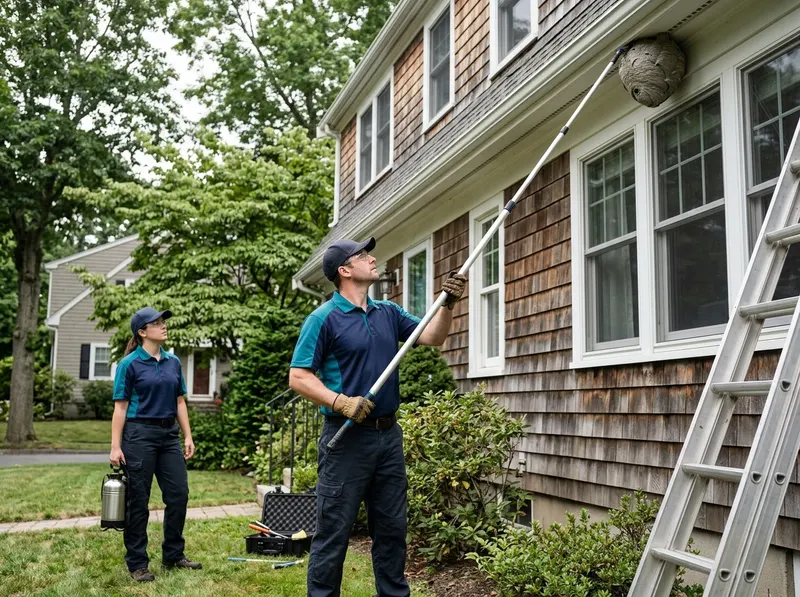
Stinging insect activity in urban settings requires a calculated structural assessment rather than broad-spectrum chemical drenching. In dense Boston streetscapes like Beacon Hill, Back Bay, and the South End, aerial colonies regularly establish footholds within ornamental copper cornices, soffits, and aging brick mortar joints. Unaddressed paper wasp and bald-faced hornet nests expand rapidly from June through September, driving aggressive perimeter defense behaviors that imperil rear garden patios, rooftop decks, and narrow pedestrian sidewalks. Subterranean yellowjacket colonies in the turf areas of Jamaica Plain or Dorchester present an alternate, concealed threat by utilizing rodent burrows to construct multi-tiered combs containing up to 5,000 workers. Micro-injection of pyrethroid or non-repellent formulations directly into the primary nest aperture collapses the colony within 2 to 4 hours while preventing the defensive dispersal of foraging workers into interior living spaces.
Selecting professional mechanical detachment over over-the-counter hardware sprays prevents structural compromise. Consumer aerosol sprays frequently trigger an immediate panic dispersal, driving stinging insects through masonry gaps into interior historic plaster lathe walls, window sash pockets, and poorly ventilated brownstone attics. Furthermore, consumer products leave the structural paper envelope intact, allowing residual pheromones to attract secondary pests or secondary colonies in subsequent seasons. High-elevation interventions on multi-story brownstones or triple-deckers in South Boston and Charlestown demand extension pole delivery systems and safety rigging to access rooflines up to 40 feet without damaging slate tiles or historic woodwork.
Executing definitive exterior stinging insect nest removal restores physical control and prevents cyclical re-infestation. Following primary colony neutralization, field technicians detach the nest structure and treat the contact substrate with a micro-encapsulated barrier. Gaps larger than one-quarter inch around fascia boards, downspouts, and decorative stone work are sealed using copper mesh or elastomeric sealants. In coastal neighborhoods like East Boston and the North End, salt air exposure and masonry settling create consistent perimeter voids that benefit from targeted non-toxic exclusion, securing older, sensitive architecture without saturating the surrounding yard or requiring multi-day building evacuations.
Every job gets a firm, written price after a free on-site visit.
Tell us about your exterior stinging insect nest removal job in Boston and we'll send a clear, written quote, usually the same day.
 Merixa Pest Treatment