Multi-family residential buildings across Suffolk County face unique biological pressures due to shared walls, centralized heating infrastructure, and aging building foundations. In historic brick rowhouses across the…
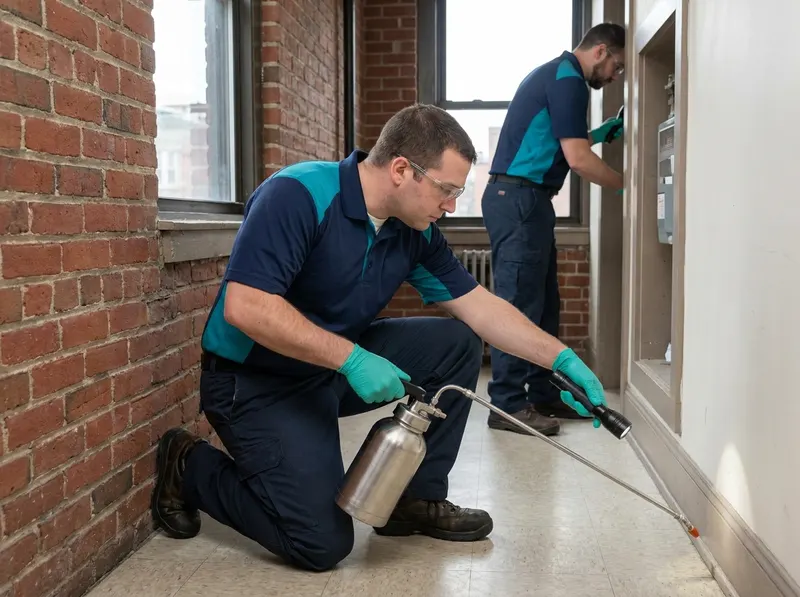
Multi-family residential buildings across Suffolk County face unique biological pressures due to shared walls, centralized heating infrastructure, and aging building foundations. In historic brick rowhouses across the South End, Charlestown, and Beacon Hill, pests do not establish in isolation; they utilize subterranean stone foundations, unused dumbwaiter shafts, and century-old floor joist cavities to travel unseen between residences. Multi-family common area pest defense isolates these pathways. By fortifying common zones such as laundry areas, shared boiler rooms, and main entryway vestibules with copper mesh, elastomeric masonry sealants, and tamper-resistant bait stations, property managers halt the vertical and horizontal dispersal of rodents and insect vectors.
Decision guidance dictates that treating individual tenant units without securing the common infrastructure creates a recurring cycle of re-infestation. If pest activity is detected inside a single apartment, treating only that interior kitchen drives pests deeper into wall cavities and adjoining hallways. Conversely, implementing common area defense cuts off the transit conduit, confining biological pressure to manageable perimeter and basement zones where non-invasive, structural remedies can be systematically deployed. This approach avoids total building evacuations, minimizing disruption for tenants while establishing physical barrier security.
Older construction characteristics throughout Boston present distinct vulnerabilities. Fieldstone basements common in Dorchester, Jamaica Plain, and East Boston often settle, creating gap tolerances exceeding one-quarter inch around gas mains and electrical conduits, sufficient for Norway rats and mice to penetrate. In high-density settings like the North End, Back Bay, and student housing corridors across Allston-Brighton, exterior trash aggregation near rear brick alleyways requires durable exterior-to-interior containment barriers. The operational sequence follows three precise steps: 1. Inspection and mapping of all foundation penetrations, common waste storage corridors, and utility runs. 2. Direct mechanical exclusion using corrosion-resistant metals and structural sealants across entry gaps. 3. Placement of secured, tamper-resistant monitoring and interception devices out of tenant reach.
Every job gets a firm, written price after a free on-site visit.
Tell us about your multi-family common area pest defense job in Boston and we'll send a clear, written quote, usually the same day.
 Merixa Pest Treatment