Carpenter ants do not consume cellulose like termites; instead, they hollow out structural members to construct polished nesting galleries, creating sawdust-like frass piles along baseboards. In Boston properties,…
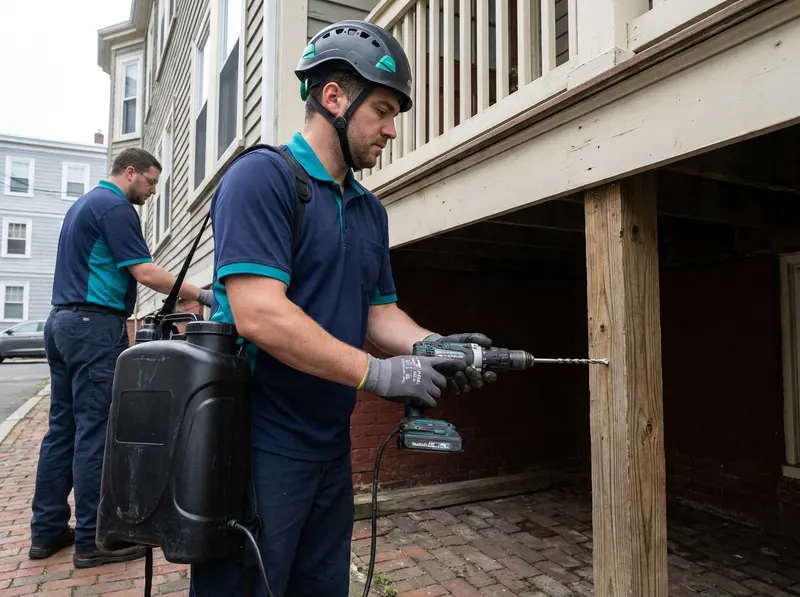
Carpenter ants do not consume cellulose like termites; instead, they hollow out structural members to construct polished nesting galleries, creating sawdust-like frass piles along baseboards. In Boston properties, these infestations thrive inside moisture-softened load-bearing timbers. The primary points of vulnerability are roof valley leak zones in South End brownstones, damp ground-level sill plates in Jamaica Plain triple-deckers, and unventilated wall voids behind historic brick party walls in Beacon Hill. Treating carpenter ants with general perimeter insecticide sprays fails because it merely kills exterior foragers while leaving parent colonies and egg-laying queens sheltered within the frame. Remediation requires an engineering-first intervention that penetrates the exact cavity where the gallery resides.
Decision guidance dictates that surface baiting fits isolated, warm-season foraging where no internal wood damage exists. Conversely, structural remediation is necessary when structural shifting, coarse wood shavings beneath drywall, or foraging activity during February and March indicate an overwintering parent nest inside the building envelope. The trade-off involves prioritizing targeted exploratory drilling into framing over cosmetic preservation: pinpoint 1/8-inch test holes in unpainted baseboards or mortar joints allow pressurized micro-treatments to saturate nesting chambers directly, preventing the structural sag common in neglected frame houses throughout Dorchester and Charlestown.
Historic masonry framing presents unique remediation parameters. Exterior brick walls often retain trapped groundwater, softening the header joists that rest directly on foundation stones. In coastal areas like East Boston and South Boston, salt air and humidity accelerate timber decay around rear porches and deck attachments, creating primary entry corridors. Precision remediation introduces non-repellent transfer actives directly into structural cavities. This formulation allows foraging workers to track the compound directly to the queen within wall cavities, ensuring colony elimination without contaminating ambient indoor air in tightly sealed historic homes.
Every job gets a firm, written price after a free on-site visit.
Tell us about your carpenter ant structural remediation job in Boston and we'll send a clear, written quote, usually the same day.
 Merixa Pest Treatment